jueves, 25 de julio de 2024

1931 Leslie Caron

Leslie Claire Margaret Caron 

(French:  was  born 1 July 1931) is a French and American actress and dancer. She is the recipient of a Golden Globe Award, two BAFTA Awards and a Primetime Emmy Award, in addition to nominations for two Academy Awards. She is one of the last surviving stars from the Golden Age of Hollywood cinema.
Caron began her career as a ballerina. She made her film debut in the musical An American in Paris (1951), followed by roles in The Man with a Cloak (1951), Glory Alley (1952) and The Story of Three Loves (1953), before her role of an orphan in Lili (also 1953), which earned her the BAFTA Award for Best Foreign Actress and garnered nominations for an Academy Award and a Golden Globe Award.

As a leading lady, Caron starred in films such as The Glass Slipper (1955), Daddy Long Legs (1955), Gigi (1958), Fanny (1961), both of which earned her Golden Globe nominations, Guns of Darkness (1962), The L-Shaped Room (1962), Father Goose (1964) and A Very Special Favor (1965). For her role as a single pregnant woman in The L-Shaped Room, Caron, in addition to receiving a second Academy Award nomination, won the Golden Globe Award for Best Actress in a Motion Picture – Drama and a second BAFTA Award.
Caron's other roles include Is Paris Burning? (1966), The Man Who Loved Women (1977), Valentino (1977), Damage (1992), Funny Bones (1995), Chocolat (2000) and Le Divorce (2003). In 2007, she won the Primetime Emmy Award for Outstanding Guest Actress in a Drama Series for portraying a rape victim in Law & Order: Special Victims Unit.

Early life and family

Caron was born in Boulogne-sur-Seine, Seine (now Boulogne-Billancourt, Hauts-de-Seine), the daughter of Margaret (née Petit), a Franco-American dancer on Broadway, and Claude Caron, a French chemist, pharmacist, perfumer and boutique owner. Claude Caron was the founder of the artisanal perfumier Guermantes. While her older brother, Aimery Caron, became a chemist like their father, Leslie was prepared for a performing career from childhood by her mother. The family lost its wealth during World War II and could not provide a dowry for Caron. "My mother said: 'There's only one profession that leads you to marrying money and becoming a princess or duchess, and that's ballet.' ... My grandfather whispered heavily: 'Margaret, you want your daughter to be a whore?' I heard it. This has always followed me". 

Of the lost fortune, Caron recalled, "My mother died of it". Her mother, who had grown up in poverty, could not cope with their reduced circumstances. She became depressed and an alcoholic and, at age 67, killed herself.

Link to Wikipedia: Leslie Caron

1917-2008 Mel Ferrer

 Melchor Gastón Ferrer[ (August 25, 1917 – June 2, 2008) was an American actor, director, producer, and screenwriter. He achieved prominence on Broadway before scoring notable film hits with Scaramouche, Lili, and Knights of the Round Table. He starred opposite his wife, actress Audrey Hepburn, in War and Peace and produced her film Wait Until Dark. He also acted extensively in European films and appeared in several cult hits, including The Antichrist (1974), The Suspicious Death of a Minor (1975), The Black Corsair (1976), and Nightmare City (1980).

Early life 


Ferrer was born in Elberon, New Jersey, of Spanish and Irish descent. His father, Dr. José María Ferrer (December 3, 1857 – February 23, 1920),[2] was born in HavanaCuba, of Catalan ancestry.[3][4] José was an authority on pneumonia and served as chief of staff of St. Vincent's Hospital in New York City. He was 59 years old at the time of Mel's birth and died three years later. 

Mel Ferrer's US-born mother, Mary Matilda Irene (née O'Donohue; January 28, 1878 – February 19, 1967), was a daughter of coffee broker Joseph J. O'Donohue, New York's City Commissioner of Parks, a founder of the Coffee Exchange, and a founder of the Brooklyn-New York Ferry. An ardent opponent of Prohibition, Irene Ferrer (as she was known) was named in 1934 as the New York State chairman of the Citizens Committee for Sane Liquor Laws.[7] Mel's parents married on October 17, 1910, in New York.

His mother's family, the O'Donohues, were prominent Roman Catholics. Ferrer's aunt, Marie Louise O'Donohue, was named a papal countess,[8] and his mother's sister, Teresa Riley O'Donohue, a leading figure in American Roman Catholic charities and welfare organizations, was granted permission by Pope Pius XI to install a private chapel in her New York City apartment.

Link to Wikipedia

1899 - 1957 Humphrey Bogart

 Humphrey DeForest Bogart (/ˈbɡɑːrt/ BOH-gart;[1] December 25, 1899 – January 14, 1957), colloquially nicknamed Bogie, was an American actor. His performances in classic Hollywood cinema films made him an American cultural icon.[2] In 1999, the American Film Institute selected Bogart as the greatest male star of classic American cinema.[3]

Bogart began acting in Broadway shows. Debuting in film in The Dancing Town (1928), he appeared in supporting roles for more than a decade, regularly portraying gangsters. He was praised for his work as Duke Mantee in The Petrified Forest (1936). Bogart also received positive reviews for his performance as gangster Hugh "Baby Face" Martin, in Dead End (1937), directed by William Wyler.

1952 Deadline (el cuarto poder) 

Awards and honors

Bogart's first nomination for an Academy Award for Best Actor was for Casablanca (1942), a film that he and co-stars Ingrid Bergman and Paul Henreid initially believed was of little significance. Bogart won the award on his second nomination, for his 1951 performance in the United Artists production The African Queen. He was nominated a third time for The Caine Mutiny (1954). He posthumously received a star on the Hollywood Walk of Fame in 1960. The United States Postal Service honored Bogart in 1997, at a ceremony at Grauman's Chinese Theatre unveiling Bogart's stamp as part of the postal service's "Legends of Hollywood" series. In 2006, the street in front of his boyhood home was renamed Humphrey Bogart Place.

Link to Wikipedia Humphrey Bogart

link to Wikipedia Humphrey Bogart on stage

Link to Wikipedia H.B radio apparence

sábado, 13 de julio de 2024

1917 -1993 Raymond Burr

Raymond William Stacey Burr 

(New WestminsterColumbia BritánicaCanadá21 de mayo de 1917-HealdsburgCalifornia12 de septiembre de 1993

Fue un actor canadiense ganador de Premios Emmy, y conocido principalmente por sus trabajos en las series televisivas Perry Mason (1957-1966) y Ironside (1967-1975).

Filantropía

Burr fue un hombre extraordinariamente generoso. Participó con la United Service Organizations en giras por Corea y Vietnam para dar apoyo a las tropas.​ Dio grandes sumas de dinero a la caridad. Apoyó económicamente la Christian Children's Fund. Asimismo, contribuyó al sostén de la McGeorge School of Law en Sacramento (California), lo cual incluía donar a la institución algunos de los guiones de la serie Perry Mason.​

Además, recaudó fondos para el Museo Bailey-Matthews Shell de Sanibel, Florida.

1954 Yvonne de Carlo and Raymond Burr

domingo, 19 de mayo de 2024

1897 - 1987 Douglas Sirk

 
Douglas Sirk (born Hans Detlef Sierck; 26 April 1897 – 14 January 1987) was a German film director best known for his work in Hollywood melodramas of the 1950s. However, he also directed comedies, westerns, and war films. Sirk started his career in Germany as a stage and screen director, but he left for Hollywood in 1937 after his Jewish wife was persecuted by the Nazis.

In the 1950s, he achieved his greatest commercial success with film melodramas Magnificent ObsessionAll That Heaven AllowsWritten on the WindA Time to Love and a Time to Die, and Imitation of Life. While those films were initially panned by critics as sentimental women's pictures, they are today widely regarded by film directors, critics, and scholars as masterpieces. His work is seen as a "critique of the bourgeoisie in general and of 1950s America in particular", while painting a "compassionate portrait of characters trapped by social conditions". Beyond the surface of the film, Sirk worked with complex mise-en-scène and lush Technicolor to underline his statements. 

Early life and career in Germany

Sirk was born Hans Detlef Sierck on 26 April 1897, in Hamburg, of Danish parentage; his father was a newspaper reporter. He spent a few years in Denmark as a child, before his parents returned to Germany and became citizens. Sirk discovered the theatre in his mid-teens, particularly Shakespeare's history plays, and also began to frequent the cinema, where he first encountered what he later described as "dramas of swollen emotions"; one of his early screen favourites was Danish-born actress Asta Nielsen. In 1919, he enrolled to study law at Munich University, but he left Munich following the violent collapse of a short-lived Bavarian Soviet Republic. Between stints at university, he began writing for his father's newspaper, not long before his father became a school principal.

Link to Wikipedia Douglas Sirk

jueves, 30 de noviembre de 2023

1929-1993 Moses Gunn

 
Moses Gunn (October 2, 1929 – December 16, 1993)   

He was an  American actor of stage and screen. An Obie Award-winning stage player, he is an alumnus of the Negro Ensemble Company.[2] His 1962 off-Broadway debut was in Jean Genet's The Blacks,[2] and his Broadway debut was in A Hand is on the Gate, an evening of African-American poetry. He was nominated for the 1976 Tony Award for Best Actor in a Play for his performance in The Poison Tree,[3] and he also played Othello on Broadway in 1970. For his screen performances, Gunn is best known for his roles as Clotho in WUSA (1970), Bumpy Jonas in Shaft (1971) and Joe Kagan on Little House on the PLinkrairie (1977–1981).

Link to Wikipedia Moses Gunn

miércoles, 29 de noviembre de 2023

1930-1980 Steve McQueen

Terrence Stephen McQueen (March 24, 1930 – November 7, 1980)[4] was an American actor and racing driver. His antihero persona, emphasized during the height of the counterculture of the 1960s, made him a top box-office draw for his films of the 1960s and 1970s. He was nicknamed the "King of Cool" and used the alias Harvey Mushman in motor races.

McQueen received an Academy Award nomination for his role in The Sand Pebbles (1966). His other popular films include The Cincinnati Kid (1965), Nevada Smith (1966), The Thomas Crown Affair (1968), Bullitt (1968), The Getaway (1972) and Papillon (1973). In addition, he starred in the all-star ensemble films The Magnificent Seven (1960), The Great Escape (1963) and The Towering Inferno (1974).

In 1974, McQueen became the highest-paid movie star in the world, although he did not act in film for another four years. He was combative with directors and producers, but his popularity placed him in high demand and enabled him to command the largest salaries

1884 - 1959 Cecil B. DeMille

Cecil Blount DeMille (/ˈsɛsəl dəˈmɪl/; August 12, 1881 – January 21, 1959) was an American filmmaker and actor. Between 1914 and 1958, he made 70 features, both silent and sound films. He is acknowledged as a founding father of American cinema and the most commercially successful prcer-director in film history. His films were distinguished by their epic scale and by his cinematic showmanship. His silent films included social dramas, comedies, Westerns, farces, morality plays, and historical pageants.

Link to: Wikipedia Cecil B. DeMille

domingo, 15 de octubre de 2023

1920-1985 Yul Brinner

Yuliy Borisovich Briner, 
Nacimiento: 11 de julio de 1920, Vladivostok, Rusia 
Fallecimiento: 10 de octubre de 1985, Hospital, Nueva York, Estados Unidos
Cónyuge: Kathy Lee (m. 1983–1985), MÁS
Hijos: Yul Brynner II, Victoria Brynner, Melody Brynner, Mia Brynner, Lark Brynner
Padres: Boris Yuliyevich Bryner, Marousia Dimitrievna
Estatura: 1,73 mconocido como Yul Brynner, fue un actor estadounidense y luego suizo de origen ruso. Es recordado principalmente por haber interpretado a Ramsés II en la película Los diez mandamientos, al rey de Siam en El rey y yo y a Chris Adams en Los siete magníficos.
Link to Wikipedia: Yul Brinner 
The Magnificent Seven Premier October 1960

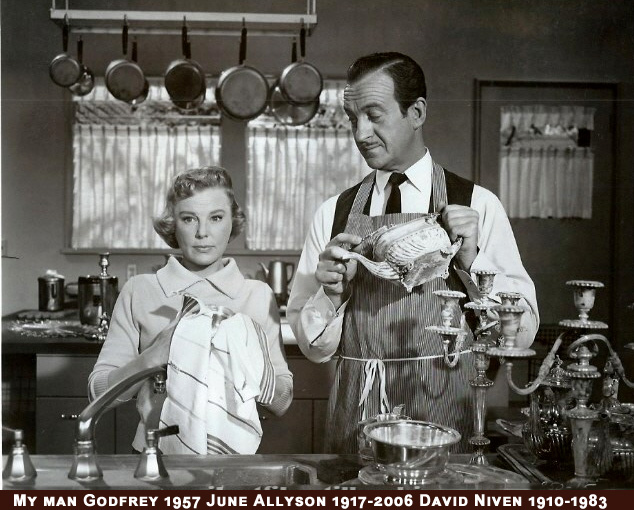
1910 - 1983 David Niven

 
James David Graham Niven (/ˈnɪvən/
1 March 1910 – 29 July 1983[1][2]) was a British actor, soldier, memoirist, and novelist. Niven was known as a handsome and debonair leading man in Classic Hollywood films. He received an Academy Award and a Golden Globe Award.
Born in central London to an upper-middle-class family, Niven attended Heatherdown Preparatory School and Stowe School before gaining a place at the Royal Military College, Sandhurst. After Sandhurst, he joined the British Army and was commissioned as a second lieutenant in the Highland Light Infantry. Upon developing an interest in acting, he found a role as an extra in the British film 
There Goes the Bride (1932). Bored with the peacetime army, he resigned his commission in 1933, relocated to New York, then travelled to Hollywood. There, he hired an agent and had several small parts in films through 1935, including a non-speaking role in Metro-Goldwyn-Mayer's Mutiny on the Bounty (1935). This helped him gain a contract with Samuel Goldwyn.
Link to Wikepedia: David Niven

Link to Facebook to see My man Godfrey 
My man Godfrey movie of 1957 

jueves, 12 de octubre de 2023

1904 - 1986 Gary Grant

 
Cary Grant (born Archibald Alec Leach;[a] January 18, 1904 – November 29, 1986) was an English-American actor. He was known for his Mid-Atlantic accent, debonair demeanor, light-hearted approach to acting, and sense of comic timing. He was one of classic Hollywood's definitive leading men. He was nominated twice for the Academy Award, and was honored with Academy Honorary Award in 1970, and the Kennedy Center Honor in 1981.[4][5] He was named by American Film Institute the second greatest male star of the Golden Age of Hollywood in 1999.[6]
Grant was born and brought up in Bristol, England. He became attracted to theater at a young age when he visited the Bristol Hippodrome
At 16, he went as a stage performer with the Pender Troupe for a tour of the US. After a series of successful performances in New York City, he decided to stay there.[8] He established a name for himself in vaudeville in the 1920s and toured the United States before moving to Hollywood in the early 1930s.
Grant initially appeared in crime films and dramas such as Blonde Venus (1932) and She Done Him Wrong (1933), but later gained renown for his performances in romantic screwball comedies such as The Awful Truth (1937), Bringing Up Baby (1938), His Girl Friday (1940), and The Philadelphia Story (1940). These pictures are frequently cited among the greatest comedy films of all time. 

Other well-known films in which he starred in this period were the adventure Gunga Din (1939), the dark comedy Arsenic and Old Lace (1944), and the dramas Only Angels Have Wings (1939), Penny Serenade (1941), and None but the Lonely Heart (1944); he was nominated for the Academy Award for Best Actor for the latter two.
During the 1940s and 1950s, Grant had a close working relationship with director Alfred Hitchcock, who cast him in four films: Suspicion (1941), Notorious (1946), To Catch a Thief (1955), and North by Northwest (1959).

For the suspense-dramas Suspicion and Notorious, Grant took on darker, morally ambiguous characters, both challenging Grant's screen persona and his acting abilities. Toward the end of his career he starred in the romantic films Indiscreet (1958), That Touch of Mink (1962), and Charade (1963). He is remembered by critics for his unusually broad appeal as a handsome, suave actor who did not take himself too seriously, and able to maintain his dignity in comedies, not sacrificing it entirely.
Link to Wikipedia